

Views: 0 Author: Site Editor Publish Time: 2025-11-09 Origin: Site


In the heart of modern industry, oxygen is far more than a life-sustaining gas—it is a vital component that drives a wide array of industrial processes. From the high-temperature furnaces of steel production to the precise melting and shaping of glass, and from complex chemical reactions to advanced metallurgical operations, industrial oxygen plays a critical role in ensuring efficiency, safety, and product quality. Industrial oxygen plants, designed to produce high-purity oxygen through sophisticated separation technologies such as cryogenic distillation or pressure swing adsorption, form the backbone of these operations. By providing a consistent, reliable supply of oxygen, these facilities enable manufacturers to optimize energy consumption, enhance process stability, and achieve higher production yields.
In addition to supporting core manufacturing processes, the role of industrial oxygen extends to improving environmental performance. Efficient oxygen supply allows for cleaner combustion, reduced greenhouse gas emissions, and improved energy efficiency across industrial applications. As industries continue to expand and production demands grow, the strategic importance of industrial oxygen plants becomes even more pronounced, making them indispensable for sustaining global manufacturing and meeting modern economic and environmental standards.
An industrial oxygen plant is a large-scale system that separates oxygen from atmospheric air. Since air contains about 21% oxygen and 78% nitrogen (with trace gases making up the rest), oxygen plants are designed to isolate and purify this oxygen for industrial use. The resulting gas can be supplied in either gaseous or liquid form, depending on the end-user’s requirements.
There are several key technologies used in oxygen plants, each suited to different industrial scales and purity demands:
Cryogenic Air Separation Units (ASUs):
These are the most common systems for large-scale oxygen production. Air is cooled to cryogenic temperatures (around -180°C), where it liquefies. The components are then separated based on their different boiling points. Cryogenic ASUs can produce oxygen with a purity of up to 99.9%, ideal for steel and glass manufacturing.
Pressure Swing Adsorption (PSA) Systems:
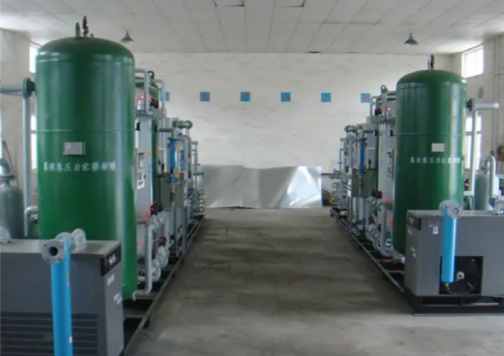
PSA plants use adsorbent materials (such as zeolites) to selectively absorb nitrogen from compressed air, leaving behind oxygen-enriched gas. These systems are smaller, more energy-efficient, and suitable for on-site generation in hospitals, laboratories, and small to medium industrial facilities.
Membrane Separation Systems:
Membrane-based systems use polymeric membranes that allow oxygen to pass through faster than nitrogen. While they typically produce lower purity oxygen (90–95%), they are highly reliable, simple to maintain, and ideal for applications that do not require ultra-high purity levels.
Oxygen is far more than a life-sustaining gas; in modern industry, it serves as a critical catalyst for a wide range of processes. Its highly reactive nature makes it indispensable for combustion, oxidation, and chemical reactions, which are central to manufacturing efficiency, product quality, and environmental management. Industrial oxygen is a backbone resource in sectors such as steel production, glass manufacturing, and chemical processing, enabling higher performance, energy savings, and reduced environmental impact.
The introduction of oxygen into industrial processes improves both operational efficiency and output quality. By enhancing combustion, oxygen allows furnaces and reactors to reach higher temperatures quickly, reducing processing times and improving energy utilization. Moreover, its role in oxidation reactions is vital for purifying metals, synthesizing chemicals, and supporting waste treatment systems. Without industrial oxygen, many high-temperature or chemical-intensive processes would be slower, less efficient, and more polluting.
The steel industry remains one of the largest consumers of industrial oxygen globally. Steel production relies heavily on oxygen to convert raw materials into high-quality finished products efficiently.
In Basic Oxygen Steelmaking (BOS), molten pig iron from blast furnaces contains impurities such as carbon, silicon, and phosphorus. High-purity oxygen is blown into the molten metal at controlled rates, triggering rapid oxidation reactions. These reactions not only remove the unwanted elements but also generate immense heat, which keeps the steel molten without requiring additional fuel.
This method significantly reduces reliance on coke or other combustible materials, streamlining the steelmaking process. Additionally, oxygen injection helps achieve precise control over chemical composition and temperature, ensuring the production of uniform, high-quality steel suitable for construction, automotive, and machinery applications.
The use of oxygen-enriched combustion in steelmaking dramatically improves thermal efficiency. With oxygen replacing ambient air in furnaces, nitrogen content is reduced, resulting in higher flame temperatures and faster heating. This efficiency reduces overall fuel consumption and shortens production cycles, allowing steel plants to produce larger volumes in less time.
Moreover, oxygen helps maintain consistent furnace conditions, which is critical for high-volume steel production. Stable combustion leads to fewer temperature fluctuations, reducing the risk of defects in the steel and enhancing overall productivity. Plants adopting oxygen-based steelmaking experience lower operational costs while achieving superior output, making oxygen a key factor in economic competitiveness.
Industrial oxygen also contributes significantly to environmental sustainability. Traditional air-based combustion produces large volumes of nitrogen oxides (NOx), which are harmful greenhouse gases. By using pure oxygen, the nitrogen content in the combustion process is drastically reduced, minimizing NOx formation and overall emissions.
Furthermore, on-site oxygen generation reduces the need for transporting high-pressure oxygen cylinders, decreasing carbon emissions associated with logistics. The ability to produce oxygen locally ensures a steady supply, reduces operational interruptions, and enhances safety by limiting the handling of compressed gases.
In summary, oxygen in the steel industry is essential not only for enhancing production efficiency and product quality but also for supporting greener, more sustainable operations. Its integration into modern steelmaking represents a perfect combination of industrial performance, cost savings, and environmental responsibility.
In the glass industry, oxygen is used to enrich combustion in melting furnaces. Traditional furnaces using air suffer from inefficiency because nitrogen (78% of air) absorbs heat without contributing to combustion. When pure oxygen is introduced, the nitrogen load decreases, allowing higher flame temperatures and faster melting.
The use of oxygen in glass furnaces leads to uniform temperature distribution, which improves the clarity and consistency of glass. It also reduces the presence of bubbles and defects during melting. Moreover, oxygen-enriched burners can achieve up to 30% fuel savings, making the process both cost-effective and eco-friendly.
Oxygen-fuel combustion reduces flue gas volume and lowers nitrogen oxide emissions, making it a preferred choice for manufacturers committed to environmental sustainability. Many glass plants today operate with on-site oxygen plants, ensuring a stable, continuous, and clean supply of oxygen for 24/7 operations.
Oxygen plays a critical role in the production of ethylene oxide, methanol, nitric acid, and other chemicals. In these oxidation processes, oxygen acts as a reactant, enabling the conversion of hydrocarbons into valuable compounds. High-purity oxygen ensures precise reaction control and higher yields.
In petroleum refining, oxygen-enriched processes improve desulfurization and hydrocarbon cracking efficiency. It is also used in wastewater treatment and incineration, where oxygen accelerates decomposition and reduces harmful emissions.
By using oxygen rather than air, chemical plants can minimize inert nitrogen buildup, improving reactor control and product consistency. Furthermore, the integration of oxygen plants on-site reduces reliance on gas transportation, improving safety and operational independence.
Many industries are moving toward on-site oxygen generation rather than depending on delivered cylinders or tankers. This shift offers numerous advantages:
Cost Efficiency: Eliminates the cost of cylinder rental, delivery, and gas losses during transport.
Continuous Supply: Provides 24/7 oxygen availability for uninterrupted production.
Customizable Output: Oxygen flow rate and purity can be adjusted based on process requirements.
Environmental Sustainability: On-site generation reduces the carbon footprint associated with logistics.
Operational Safety: Reduces handling of high-pressure gas cylinders, minimizing risks.
With modular designs and scalable capacity, oxygen plants can serve both medium-sized factories and large industrial complexes, offering flexible and sustainable oxygen solutions.
As industries embrace digitalization and sustainability, oxygen plant technology is also evolving rapidly:
Energy Recovery Systems: Modern cryogenic plants now integrate energy recovery units to reuse cold energy, reducing power consumption.
Automation and Smart Monitoring: Advanced sensors and AI-based control systems allow real-time monitoring of purity, pressure, and energy efficiency.
Green Integration: Future oxygen plants will increasingly operate in tandem with renewable energy sources, such as solar and wind power, creating greener production cycles.
Compact and Modular Designs: Portable PSA and hybrid systems are gaining popularity among smaller manufacturers, offering the same reliability in a compact footprint.
These innovations make oxygen plants more sustainable, efficient, and adaptable than ever before.
From the steel mills that form the backbone of infrastructure to the glass furnaces that produce both transparency and artistry, and the chemical plants that manufacture essential compounds for modern life, oxygen plants quietly drive industrial progress. Their capacity to provide a continuous and reliable supply of high-purity oxygen has made them indispensable components of global manufacturing operations, supporting efficiency, safety, and consistent product quality across a variety of sectors.
As industries increasingly pursue cleaner, more sustainable operations, modern oxygen generation technologies — particularly cryogenic and PSA oxygen plants — are poised to play an even greater role. These systems not only help reduce emissions and optimize energy consumption but also ensure stable supply chains that are critical for large-scale industrial production. By integrating high-efficiency oxygen generation systems, companies can achieve measurable improvements in operational performance, maintain compliance with environmental standards, and secure a long-term competitive advantage.
For businesses operating in steel, glass, or chemical manufacturing, partnering with a reputable oxygen plant manufacturer is a strategic move toward greater productivity and sustainability. Guangzhou Minwen Cryogenic Equipment Co., Ltd. offers a range of high-efficiency oxygen generation systems and customized cryogenic solutions, backed by a professional team dedicated to helping clients select, implement, and maintain the optimal system for their specific operational needs. By choosing the right technology and support, companies can ensure long-term reliability, superior performance, and efficient, environmentally responsible production without compromise.


