

Views: 0 Author: Site Editor Publish Time: 2025-11-12 Origin: Site


In today’s fast-paced industrial landscape, efficiency, safety, and quality are critical priorities for manufacturing facilities. From metal fabrication and chemical production to food processing and wastewater treatment, oxygen plays a vital role in sustaining operations. Yet, many facilities still depend on outsourced oxygen supply, which can be costly, unreliable, and environmentally inefficient.
A reliable oxygen plant system provides an effective solution—enabling manufacturers to generate high-purity oxygen on-site, ensuring consistent supply, cost savings, and improved process control.
An oxygen plant system is a facility designed to produce and supply oxygen by separating it from atmospheric air. Since air contains approximately 21% oxygen, oxygen generation plants use advanced technologies to extract and purify oxygen for industrial use.
Core Working Principle
Most industrial oxygen plants utilize one of the following methods:
Pressure Swing Adsorption (PSA):
This system employs molecular sieves to separate oxygen from nitrogen under varying pressure conditions. PSA oxygen plants are ideal for continuous, on-site generation with purity levels up to 95%.
Cryogenic Distillation:
A cryogenic oxygen plant cools air to extremely low temperatures until it liquefies, then separates gases based on boiling points. This method can achieve oxygen purity levels exceeding 99.5%, suitable for industries like steel manufacturing and medical applications.
Membrane Separation:
In this process, air passes through a semi-permeable membrane that selectively allows oxygen molecules to diffuse through. It’s a compact, energy-efficient choice for smaller facilities.
Each system type has its advantages, but all share one essential function: delivering a reliable, continuous supply of oxygen tailored to industrial demand.
Oxygen is one of the most widely used industrial gases, serving as a backbone for a multitude of manufacturing processes. Its presence and purity directly influence operational efficiency, energy consumption, product quality, and safety. For modern manufacturing facilities, oxygen is not merely a utility; it is an essential component that drives production and ensures consistent, high-quality output.
In metal industries, oxygen plays a pivotal role in various high-temperature operations such as cutting, welding, melting, and smelting. High-purity oxygen enhances combustion efficiency, allowing furnaces to reach elevated temperatures more rapidly and maintain stable thermal conditions. This increased efficiency reduces fuel consumption and minimizes operational costs.
For steel production specifically, oxygen enrichment is a critical factor in blast furnace operations. By introducing high-purity oxygen into the furnace, manufacturers accelerate the chemical reactions needed to convert iron ore into steel. This not only shortens production cycles but also results in a more uniform metallurgical quality, reducing defects and improving overall output. Additionally, efficient oxygen use contributes to lower carbon emissions, making steel production both more cost-effective and environmentally responsible.
Oxygen is indispensable in the chemical and petrochemical sectors, particularly for oxidation reactions. Many key industrial chemicals, such as methanol, ethylene oxide, nitric acid, and various organic intermediates, rely on precise oxygen supply for optimal reactions. Even minor fluctuations in oxygen purity or flow can lead to inconsistent reactions, unwanted by-products, and reduced yields.
Having an on-site oxygen plant enables manufacturers to maintain precise control over oxygen purity, ensuring that chemical reactions proceed predictably and safely. This is especially critical in processes involving highly reactive or corrosive substances, where stability in oxygen supply directly impacts product quality, plant safety, and regulatory compliance.
Oxygen is also crucial in glassmaking and ceramics, where combustion quality directly affects product clarity, consistency, and structural integrity. Replacing regular air with high-purity oxygen in furnaces allows for higher flame temperatures and more uniform heating. This reduces thermal gradients that can cause cracking, warping, or other defects.
For glass manufacturers, uniform heating facilitated by oxygen improves transparency and color consistency, while in ceramics, it ensures proper sintering and strength. High-temperature oxygen-enriched processes also increase fuel efficiency, making production more sustainable and cost-effective.
In water treatment facilities, oxygen plays a vital role in supporting aerobic biological processes. By supplying oxygen to microbial populations, facilities can efficiently break down organic waste, reduce odor, and improve water clarity.
Oxygen-enriched aeration systems outperform conventional air blowers in both efficiency and energy use. The higher dissolved oxygen concentration accelerates the breakdown of organic matter, allowing wastewater treatment plants to process higher volumes with less energy consumption. On-site oxygen generation ensures a reliable and consistent supply, which is critical for meeting environmental discharge standards and maintaining treatment efficiency.
Oxygen has several applications in the food and beverage industry, particularly in food preservation, packaging, and fermentation. In modified atmosphere packaging (MAP), oxygen levels must be carefully controlled to extend shelf life and prevent spoilage. Similarly, oxygen is often required in fermentation processes to maintain the health and activity of microbial cultures.
On-site oxygen generation ensures that manufacturers have a continuous supply of high-purity oxygen, minimizing the risk of contamination that can compromise product safety. This is essential for maintaining quality standards, protecting brand reputation, and complying with stringent food safety regulations.
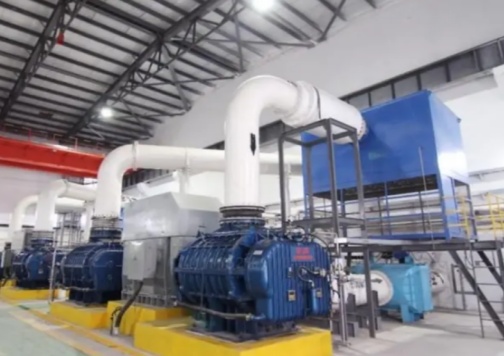
Installing an on-site oxygen plant offers manufacturers significant operational and economic benefits, especially compared to relying on delivered oxygen cylinders or liquid oxygen tanks.
Outsourced oxygen delivery involves recurring expenses for transportation, cylinder rental, and handling. Over time, these costs accumulate substantially. By producing oxygen on-site, facilities can significantly reduce operational expenses while ensuring predictable supply.
Modern systems, such as Pressure Swing Adsorption (PSA) or cryogenic oxygen plants, are designed to operate with minimal maintenance for several years. The initial investment is quickly offset by savings from reduced cylinder purchases, delivery fees, and storage logistics.
Interruptions in oxygen supply can halt production lines, leading to significant financial losses and operational setbacks. On-site oxygen plants eliminate this dependency, providing an uninterrupted, on-demand supply.
Additionally, facilities can integrate backup storage tanks or dual-generation systems to ensure redundancy. This guarantees continuous operation even during scheduled maintenance or unexpected equipment downtime, enhancing overall production reliability.
Different manufacturing processes require varying oxygen purities. For example, wastewater treatment may only need around 90% oxygen, while high-precision medical or metallurgical applications may demand purities exceeding 99.5%.
A modern oxygen plant allows for customization to meet specific industrial requirements, ensuring optimal efficiency, product quality, and safety. This flexibility is impossible with standard cylinder or bulk oxygen supply, which often comes in fixed purities.
Producing oxygen on-site reduces the carbon footprint associated with transportation, packaging, and storage of delivered oxygen. Many modern plants incorporate energy-efficient compressors, advanced purification systems, and heat recovery mechanisms to minimize energy consumption.
Facilities that adopt on-site oxygen generation can achieve lower emissions, reduced reliance on fossil fuels for transportation, and compliance with increasingly strict environmental regulations—all while supporting corporate sustainability goals.
Handling high-pressure oxygen cylinders carries risks, including leaks, fire hazards, and potential explosions. On-site oxygen plants reduce these dangers by generating oxygen as needed and storing it at controlled, lower pressures.
Facilities also gain full control over monitoring and safety protocols, including automatic shutdowns, pressure regulation, and leak detection. This minimizes workplace risks and ensures compliance with occupational safety standards, protecting both personnel and assets.
When selecting an oxygen plant for industrial use, reliability and efficiency depend on several key factors.
Modern oxygen plants come with intelligent control systems that monitor purity, pressure, and flow rates in real time. Automation ensures consistent output with minimal human intervention, reducing errors and improving productivity.
Durable compressors, precision valves, and corrosion-resistant materials are essential for long-term reliability. Quality construction reduces maintenance needs and extends system lifespan.
Energy consumption accounts for a significant portion of operational costs. Efficient compressors, regenerative heat exchangers, and optimized air purification systems contribute to lower energy usage and reduced operating expenses.
Space-saving designs make it easier to integrate oxygen plants into existing facilities. Modular systems allow scalability—manufacturers can expand capacity as production demands grow.
Reliable suppliers provide comprehensive support, including installation, training, spare parts, and regular maintenance. This ensures smooth, continuous operation throughout the system’s lifespan.
In modern manufacturing, a reliable oxygen plant system is no longer a luxury—it’s a necessity. Whether used for combustion, oxidation, aeration, or packaging, oxygen is the lifeblood of countless industrial processes. On-site oxygen generation offers unmatched advantages in reliability, cost-effectiveness, and sustainability, allowing manufacturers to maintain full control over their operations.
For businesses seeking dependable and high-performance oxygen plant systems, Guangzhou Minwen Cryogenic Equipment Co., Ltd. offers advanced solutions tailored to diverse industrial needs. With expertise in cryogenic and PSA oxygen technologies, the company provides durable, energy-efficient equipment backed by professional service and support.
If your facility aims to enhance production stability, reduce costs, and embrace greener operations, consider consulting Guangzhou Minwen Cryogenic Equipment Co., Ltd.—a trusted partner for modern oxygen generation systems.


